Feeling unsafe at night : a major challenge in cities
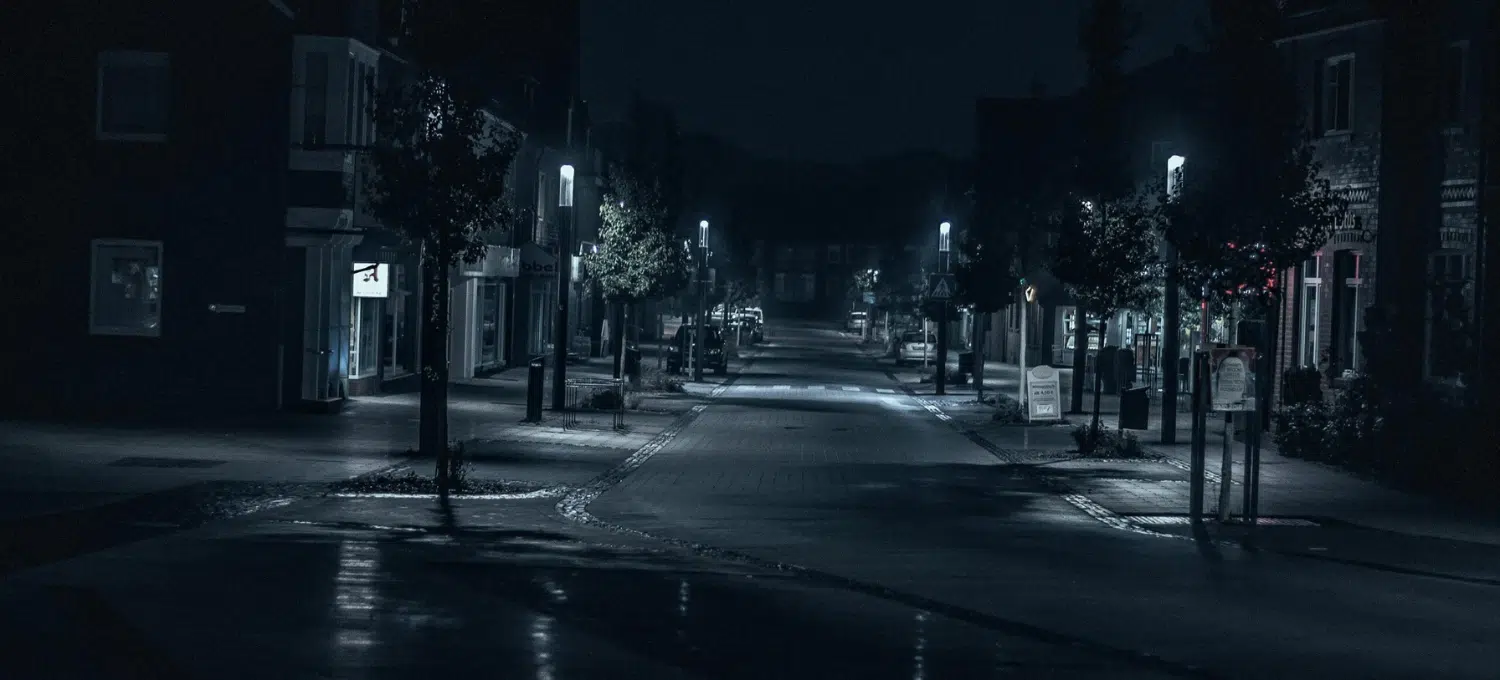
These decisions are also part of an environmental objective : to limit light pollution in order to protect nocturnal biodiversity. Artificial light disrupts the natural cycles of insects, birds and mammals, alters biological rhythms and affects urban ecosystems. Reducing lighting therefore helps to address a real ecological challenge.
However, the absence of light also removes reassuring spatial cues :
- impaired perception of distances
- difficulty identifying faces or movements
- shaded areas that can cause anxiety
Urban planning therefore becomes a key lever for reconciling energy efficiency, biodiversity protection and perceived safety.
How urban planning can adapt
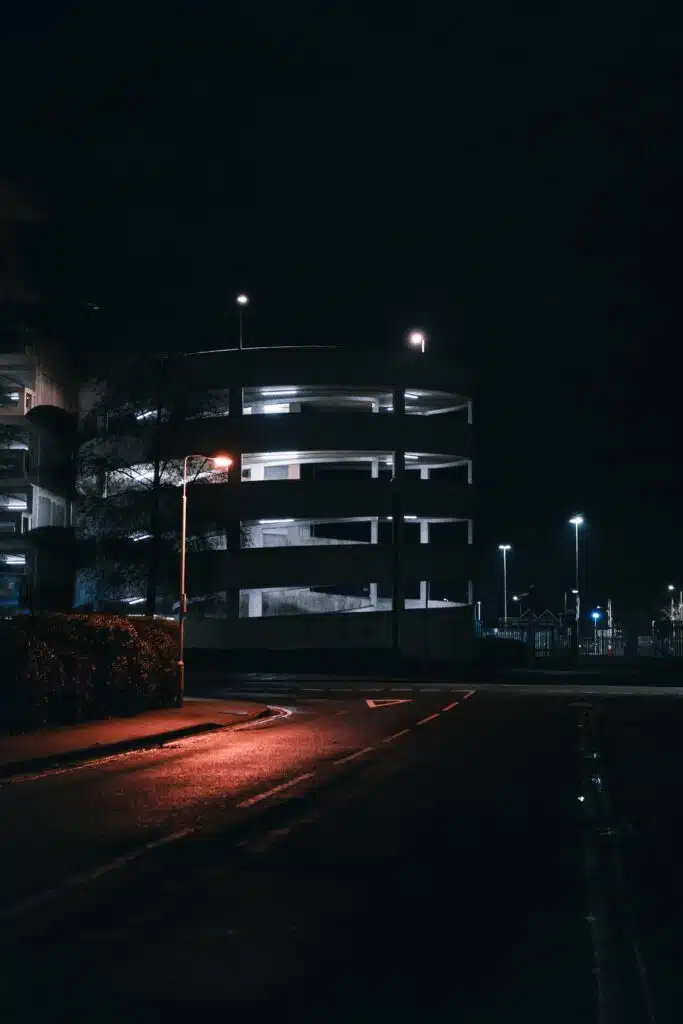
Light has historically been used as a tool to make public spaces safer. It is not only used to see, but also to reassure.
Appropriate lighting makes it possible to :
- improve the visibility of pedestrian walkways
- clarify traffic areas
- create constant visual landmarks
- create constant visual landmarks
But today, the challenge is no longer just to provide more light.
It is about providing better lighting : targeting strategic areas (pedestrian crossings, stairs, cycle paths), adjusting light intensity according to the time of day, and favouring more energy-efficient solutions.
Urban planning can also incorporate passive devices that do not require a permanent power supply in order to maintain minimum visibility in the event of a night-time blackout or power cut.
The key lies in striking a balance between simplicity, environmental friendliness and the psychological comfort of users.
LuminoKrom® as an innovative solution
In this context, alternative solutions are emerging to maintain visual landmarks without resorting to continuous lighting.
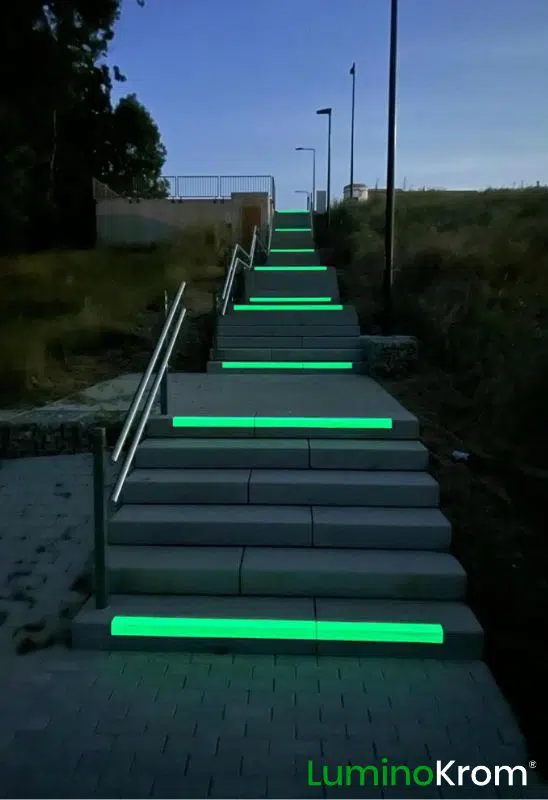 LuminoKrom® is a photoluminescent technology that absorbs natural or artificial light during the day and releases it at night, without the need for a power supply.
Applied to road markings, such as on cycle paths or pedestrian crossings, for example (soft pathways), it makes it possible to :
- materialise trajectories
- improve the visibility of public spaces
- visually secure night-time travel
- operate without consuming energy
This approach offers a concrete solution for local authorities wishing to reduce night-time lighting while maintaining visible landmarks for users.