How long does photoluminescent paint last?
15/12/2025
All LuminoKrom® news
Table of contents
 

Photoluminescence is often perceived as a simple technology: a material that captures energy from a light source and releases it in the dark. However, behind this principle, which is well known to the general public, lie real technical challenges, particularly when it comes to understanding how long a photoluminescent paint remains effective over time.

Many people wonder about the stability of the luminescence emitted, the resistance of the coating, or the impact of external conditions. The longevity of photoluminescent paints does not actually depend solely on their ability to glow, but on a set of parameters related to the materials, formulation, substrate, and environment in which they are used.

Our article aims to clarify these often misunderstood concepts and provide an accurate, factual overview of how phosphorescent products behave over time, in order to help decision-makers, local authorities, and professionals choose the solutions best suited to their needs.

Lifespan of photoluminescent paint: what you really need to look at


The longevity of the marking depends on the substrate, usage, and abrasion.

Contrary to popular belief, photoluminescence as a property does not have a limited lifespan: pigments retain their ability to recharge and emit light over the long term. What does change, however, is the condition of the paint film when subjected to environmental stresses.


To understand the longevity of a luminescent coating, it is therefore necessary to focus not on the light itself, but on the elements that influence the gradual wear and tear of the coating. Several parameters play a key role. Here are the main factors to consider:

matière béton

The nature of the medium: an often underestimated factor

The behavior of paint depends largely on the material to which it is applied:

  • New or good condition asphalt: even surface, good adhesion, minimal mechanical wear.
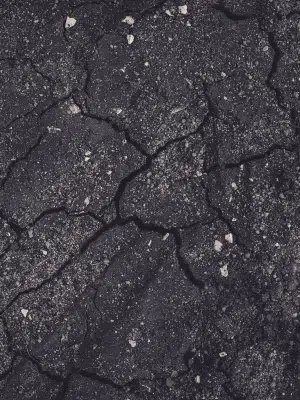
  • Rough, old, or cracked asphalt: micro-roughness increases friction and accelerates paint film wear.
  • Concrete substrates: often smoother, but susceptible to dusting or micro-delamination.

A support in good condition can significantly extend the longevity of the marking.

Traffic intense sur piste cyclable

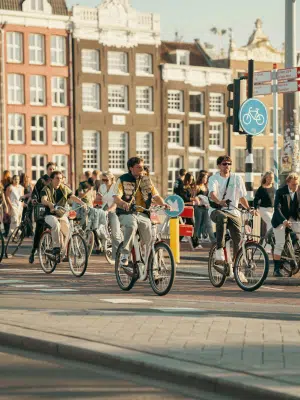
Use: traffic intensity and nature of traffic flows

The lifespan varies greatly depending on the type of use:

  • Light traffic (pedestrians) → Very slow wear, extended service life.
  • Regular bicycle traffic → Moderate wear: road markings remain intact for several years.
  • Motor vehicle traffic → Higher stress, requiring more frequent replacement.

Studies conducted on different communities show that a trail with 2,000 to 3,000 daily users wears out much faster than a greenway with low traffic.

abrasion-marquage-routier

Mechanical abrasion: the primary cause of actual wear

Even high-performance paint will eventually be mechanically abraded. There are many factors that contribute to abrasion:

  • Repeated friction from bicycle tires and scooters
  • Deposits of sand, gravel, and dust
  • Lateral movements caused by braking or changes in trajectory
  • Passage of maintenance or service vehicles
  • Mechanical snow removal (blades, brushes, etc.)

In France, it is estimated that a high-traffic area can generate up to several thousand tire passes per day on an urban bike path. The requirements for paint are therefore high.

conditions-climatiques

Climatic conditions: UV rays, rain, thermal cycles

While UV rays do not alter photoluminescence, they can affect the performance of the binder that makes up the paint. Let's add to that:

  • runoff effect
  • freeze/thaw cycles
  • temperature differences that can exceed 40°C between January and August
  • continuous humidity in certain regions

Each element gradually contributes to the aging of the paint film.

qualite-peinture

Formulation quality: the determining factor

Not all photoluminescent paints are designed for intensive outdoor use. Some decorative or domestic paints, although bright, are not resistant to road traffic. Finally, one of the most decisive factors remains the quality of the formulation:

  • choice of binder and resin
  • photoluminescent pigment loading rate,
  • particle size and type of fillers
  • intrinsic resistance to UV and mechanical stress

This is what clearly differentiates decorative interior paint from photoluminescent road paint, which is designed to last on the ground and outdoors.

The lifespan of luminescent paint can vary considerably depending on the technology used and the conditions of use.
Why does phosphorescent road paint need to be designed differently?

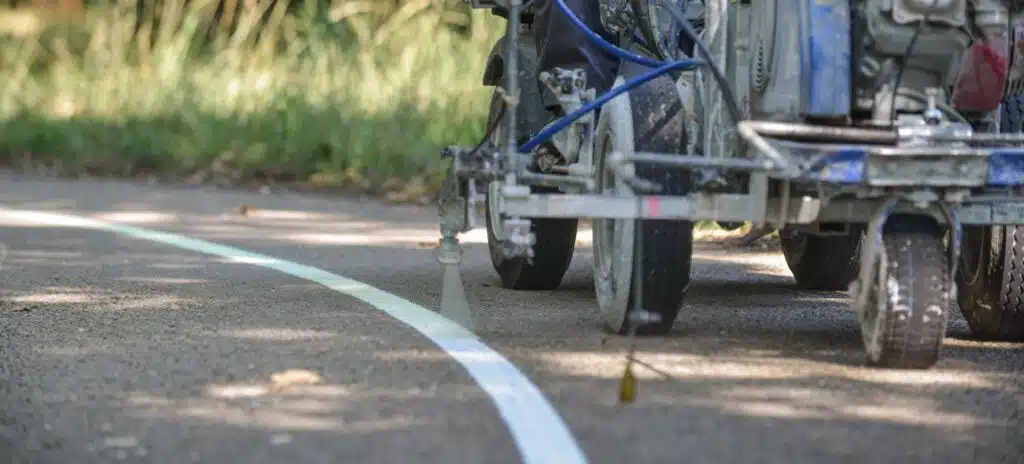
For photoluminescent markings to remain durable outdoors, on a bike path or walkway, they must meet the same requirements as professional road paints... with the added requirement of high luminous performance. Here's what sets LuminoKrom® apart from standard products:

  1. Mechanical resistance designed for roads with no traffic: LuminoKrom® uses a high-performance binder, specifically developed to withstand repeated cycles of traffic, friction, micro-impacts, and sand, and to remain in place despite daily climatic variations. The first projects carried out on cycle paths in Pessac, Annecy, Esvres-sur-Indre and Châteauroux show consistent mechanical performance, even after several years.
  2. Long-lasting outdoor durability: Since the first pilot projects were carried out in 2018, feedback shows that the markings remain visible, the paint retains its integrity, and the photoluminescence remains effective. In some municipalities, such as Aix-en-Provence and Leucate, the product applied in 2019 is still in place today, with its nighttime visibility intact.
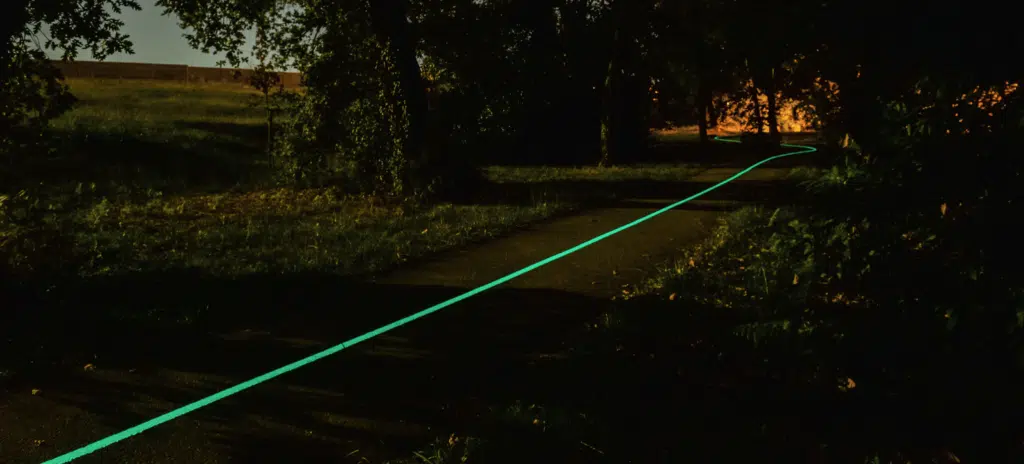
  3. Long-lasting light performance: Unlike other technologies, the photoluminescent pigments used in LuminoKrom® do not deteriorate over time, retain their ability to recharge with light energy, and emit up to 10 hours of light outdoors every night. Thus, photoluminescence does not "age": only mechanical wear and tear on the paint film may require renewal.


How long does LuminoKrom® paint actually last?

Thanks to feedback gathered in the field over the past seven years, it is now possible to provide reliable estimates. The first LuminoKrom® applications, carried out in 2018 in a variety of contexts—urban bike paths, rural greenways, shared areas, parking lots—have made it possible to observe the behavior of the markings on different types of surfaces and under various traffic levels.

This diversity of situations now provides a solid basis for analysis and allows clear trends to be identified regarding the mechanical performance of the paint film and the maintenance of photoluminescent performance over time.


Observations on existing construction sites

Data compiled from more than 150 km of bike paths and greenways equipped with LuminoKrom® now allows us to establish robust trends. This field feedback, gathered from a wide variety of contexts (urban environments, forest areas, coastal environments, contrasting climates), shows that the technology performs consistently and predictably over time.

  • In low-abrasion areas, such as rural greenways or pedestrian paths, the paint remains in excellent condition for between 4 and 6 years, with very limited loss of thickness and intact photoluminescence.
  • In areas with moderate traffic, typical of urban or suburban cycle paths, the observed longevity is generally between 3 and 5 years, depending on the volume of bicycle traffic and the quality of the surface.
  • In highly abrasive areas (roundabouts, intersections, lane entrances, braking zones), where friction is more intense and concentrated, renewal may be advisable after 2 to 3 years to ensure optimal visibility.

These figures are fully consistent with those observed for traditional professional road paints, confirming the robustness of LuminoKrom® luminescent technology despite its specific lighting requirements.

Feedback on our historic achievement: the phosphorescent track in Pessac

Among all the projects monitored since the inception of the LuminoKrom® program, the most iconic example remains undoubtedly the first phosphorescent bike path inaugurated in Pessac in 2018. This project is now a benchmark for assessing the longevity of the markings, as it has been in use for seven full years in real-world conditions on infrastructure that is open to the public and subject to both weather conditions and daily use.

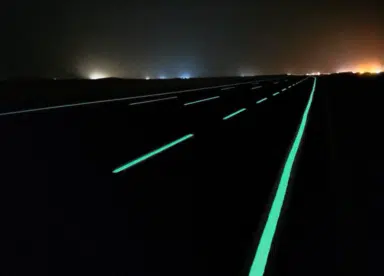
From the moment it was inaugurated, this track made a lasting impression thanks to its unprecedented level of nighttime brightness, providing clear and comfortable visibility for cyclists for over 10 hours, even in the absence of public lighting. Seven years later, this historic achievement remains a valuable testament to the long-term performance of a luminescent paint designed specifically for roadways

piste-luminescente-cyclable-pessac

For more information

Discover our project on the Pessac cycle path.
Information and feedback from the construction site.

The analysis conducted on this section reveals an important lesson: the markings have held up well despite the lack of specific maintenance. Where one might expect significant deterioration or a significant loss of light performance, the track is, on the contrary, in very satisfactory overall condition. In the dark, the photoluminescence remains visible, legible, and impactful.

The slight decrease in light intensity observed after seven years, which is approximately 10%, is not due to physical fatigue of the photoluminescent pigments, which naturally retain their intrinsic emission capacity. This reduction is exclusively due to the gradual fouling of the paint film. Unlike traditional roads and highways, bike paths do not always benefit from regular maintenance to remove dust, pollen, plant matter, and microparticles that accumulate over the seasons. A thin but continuous layer of dirt can thus form, slightly reducing the amount of light that can be recharged during the day and therefore re-emitted at night.

This observation is crucial, as it shows that the decline in performance is not linked to the aging of the technology, but to a lack of maintenance of the surface. A simple mechanical or high-pressure cleaning operation could instantly restore much of the original brightness. The behavior observed on this track therefore shows that LuminoKrom®'s photoluminescence is not only stable over time, but can also be reactivated once the surface is cleaned.

Furthermore, the Pessac runway is an interesting case because it represents a rather unfavorable situation from a sustainability perspective:

  • lack of maintenance for several years
  • green environment bringing dust, pollen, and microparticles
  • daily bicycle traffic
  • natural exposure to rain, UV rays, temperature variations, and seasonal deposits

Despite this, the paint film is still present, and the photoluminescence continues to perform its role fully. These seven years of hindsight now allow us to draw solid conclusions about the actual longevity of photoluminescent markings outdoors. On a regularly maintained road or a road with less traffic, a LuminoKrom® product can last at least 6 to 7 years without any noticeable loss of performance. In some less abrasive or better maintained contexts, the duration can even reach 10 years, while maintaining effective photoluminescence and satisfactory nighttime readability.

In summary, the Pessac experiment provides real-world validation of the durability of LuminoKrom® technology. It demonstrates that, even without maintenance and in an environment subject to multiple stresses, the markings retain their remarkable quality over time. For local authorities, this field feedback provides concrete proof of LuminoKrom®'s ability to offer a reliable, durable, and economically viable solution for improving nighttime mobility safety.

When and how should luminescent paint be renewed?


When should you intervene?

Several signs may indicate that renewal is necessary for the site:

  • visible reduction in the thickness of the product layers
  • areas of mechanical discoloration,
  • loss of legibility of the layout (blurred contours),
  • excessive roughness of the substrate due to aging of the asphalt.

In practice, local authorities observe that renewal is appropriate every 5 years, depending on the intensity of use.

How does the operation work?

When photoluminescent marking reaches the end of its cycle, there are two possible renewal solutions, depending on the condition of the substrate and the desired level of performance.

Both approaches enable rapid restoration of markings while keeping costs and intervention constraints under control. We will discuss both methods in more detail in a dedicated article.

application-peinture

Option 1 — Add a new layer of LuminoKrom® to the existing marking

This method is the simplest and most economical. It restores the luminescence of the marking by reinforcing the phosphorescent layer. The improvement is noticeable, but does not quite match the intensity achieved during the first application. This solution is suitable when the marking is still legible and in good mechanical condition.


Option 2 — Apply a white coat followed by a coat of LuminoKrom®

This option restores the performance of a new application, both in terms of daytime visibility and nighttime photoluminescence. It does not generate excessive thickness, as the original film has naturally lost some of its thickness over the years. This is the preferred solution when a complete upgrade is desired.

Nighttime broadcast duration vs. lifespan: a common confusion

Many people confuse two very different concepts: the emission duration and the lifespan of a luminescent marking. Here are the characteristics to consider:


Notion Definition Impact and durability
Nighttime broadcast duration Number of hours of luminescence emitted in the dark or darkness Up to 10 hours outdoors for LuminoKrom® Almond Green paint
Paint durability Time during which the marking remains in place and effective Several years depending on usage


Outdoor photoluminescence works every night, as long as the paint film is intact.

A sustainable solution for communities: performance, economy, safety

For road managers, investing in a durable photoluminescent product offers concrete benefits:

Icone vélo

Improved safety

Improved safety for soft mobility: Nighttime visibility on bike paths is improved without additional street lighting.

Icone argent

Reduction in expenses

Reduction in lighting costs: 1 km of track requires an average of 15 to 20 traditional light points... compared to 0 kWh for LuminoKrom®.

Icone ville

Limited maintenance

Limited and predictable maintenance: Simple replacement, maintenance cycles comparable to conventional markings.

Icone poignée de main

Proven reliable solution

A robust solution proven in real-world conditions: More than 200 local authorities and infrastructure managers currently use LuminoKrom®.

The longevity of phosphorescent paint depends mainly on the mechanical stresses to which it is subjected. Thanks to its formula specially developed for outdoor use, the LuminoKrom® solvent-based range offers exceptional durability, proven since 2018 on tens of thousands of square meters.

Sustainable, economical, safe, and easy to renew, it is fully in line with strategies for energy transition and the promotion of soft mobility.

Need assistance?
Consider integrating photoluminescence in your area.
With the help of our experts, work together to design a tailor-made solution adapted to your needs and energy challenges.